
Qlaris
Point of sales for micro and small businesses
 Next.js
 Go Fiber
 PostgreSQL
 Shadcn/ui
 Tailwind
 Cloud Run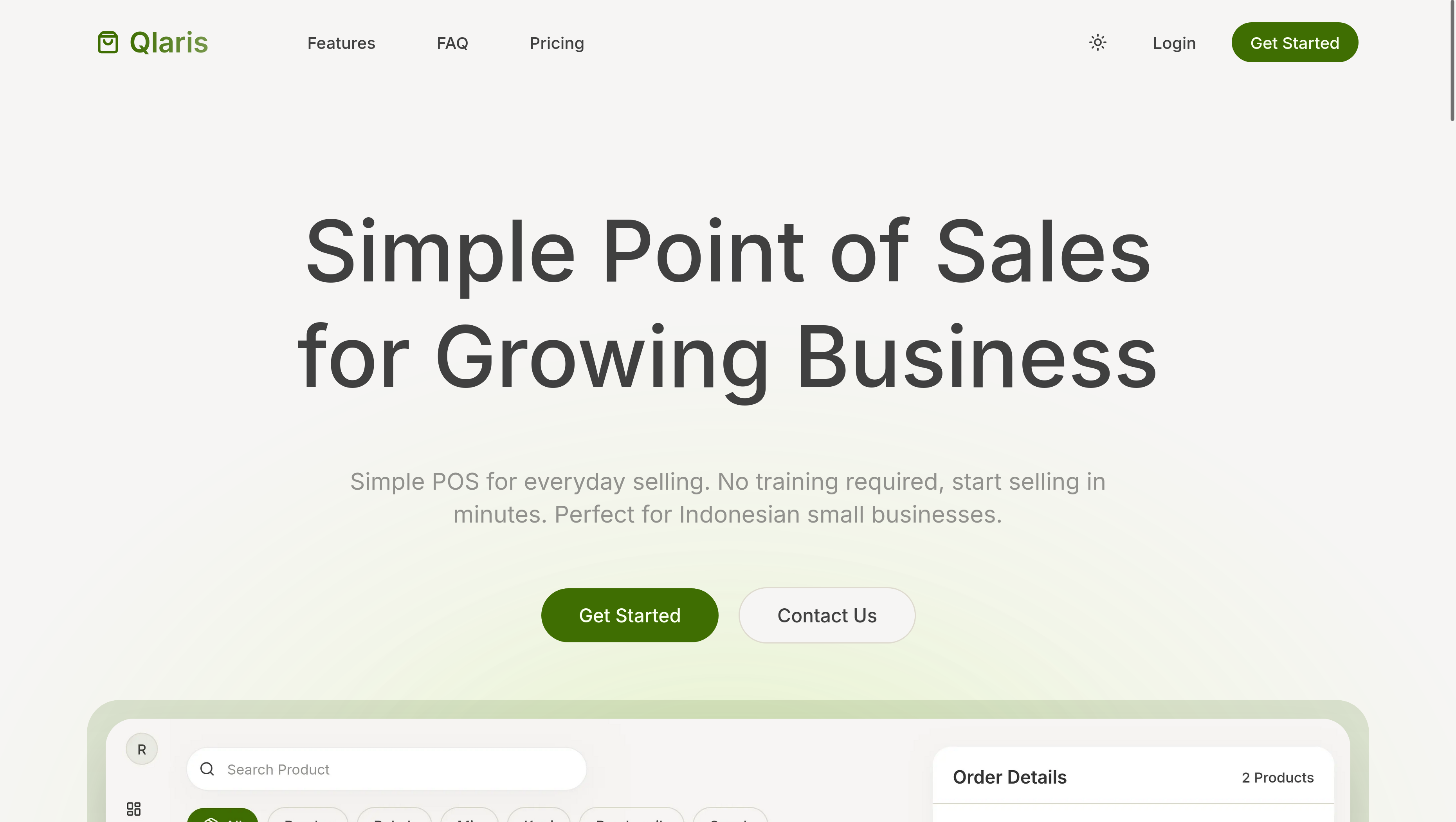
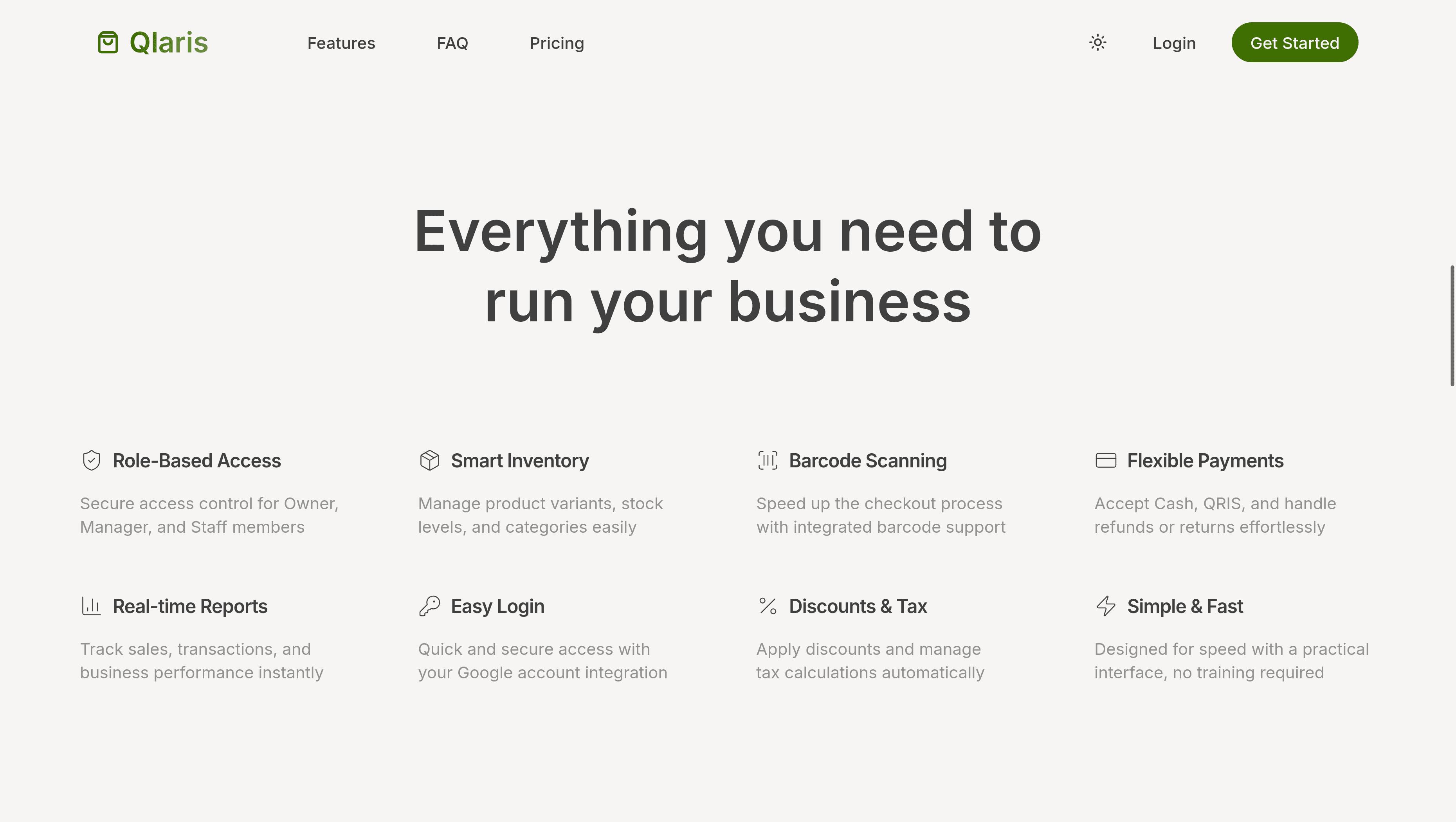
Overview
Qlaris is a web-based Point of Sale (POS) built for micro, small, and medium enterprises (MSMEs) that don’t need expensive POS machines to run sales. A phone, tablet, or laptop is enough.
Designed to be simple, fast, and practical, Qlaris helps offline stores complete sales immediately, with speed as the top priority.
Problem
Most POS systems for MSMEs are:
- Too expensive and dependent on dedicated hardware
- Require long setup and staff training
- Slow at checkout due to multiple steps and confirmations
- Overloaded with features that create confusion
In reality, many MSMEs simply need fast selling, not accounting software.
Target Users & Constraints
- Users: MSMEs (retail stores, small restaurants, cafes, barbershops, laundries, etc.)
- User Demographic: Gen Z / Millennials (technology-literate)
- Devices: Phone or tablet (touch-first), laptop.
- Store Environment: Fast-paced, limited space
- Internet: Stable, but optimized for minimal latency
Core Principles
Based on the constraints above, Qlaris follows these principles:
- Minimalist: Focus on essential MVP features only
- Responsive: Optimized for all devices, touch-first
- Fast: Optimized for performance and quick checkout flow
- Device-Optimized: Leverage built-in capabilities (e.g., camera for barcode scanning)
- Mutli-tenant: One app for many businesses, with separate data for each.
Core Features
Authentication & Staff Management
Owner and staff login with secure session handling. Owner can add/edit/deactivate staff.
Product Management
Add, edit, activate/deactivate products with stock tracking.
Checkout (Core POS)
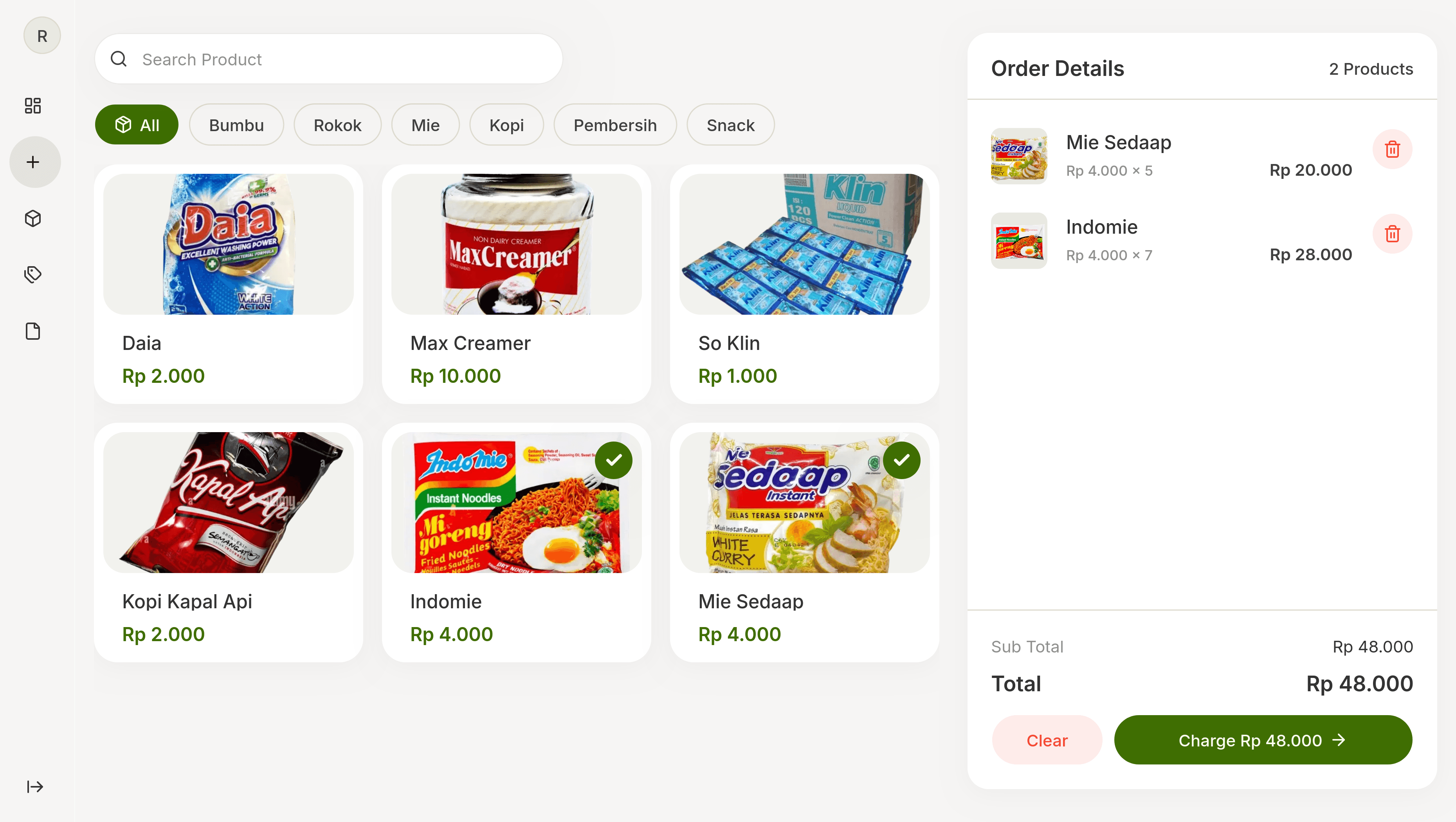
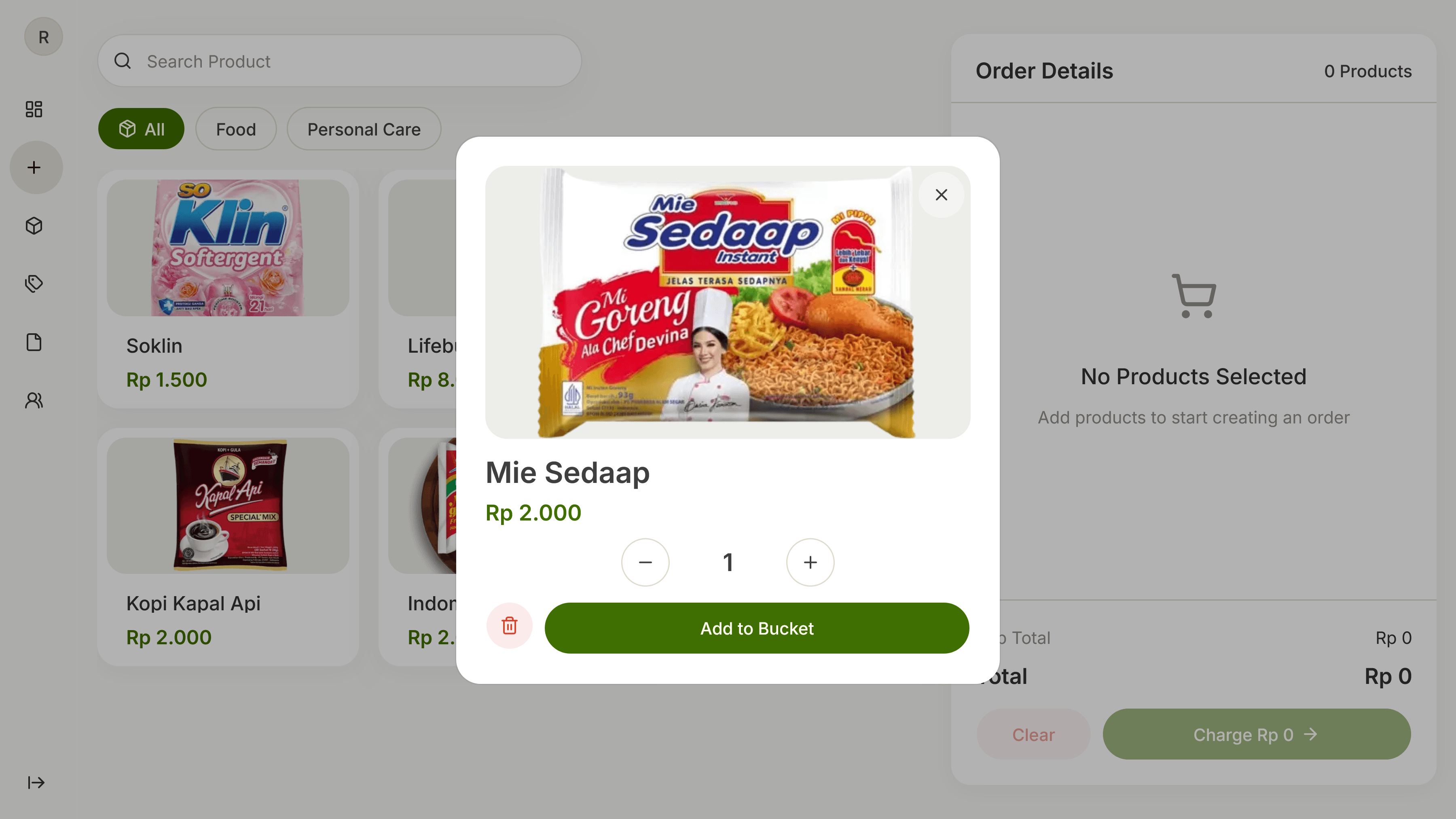
Tap product → adjust quantity → pay → generate receipt. Stock automatically reduced after checkout.
Transactions & Reports
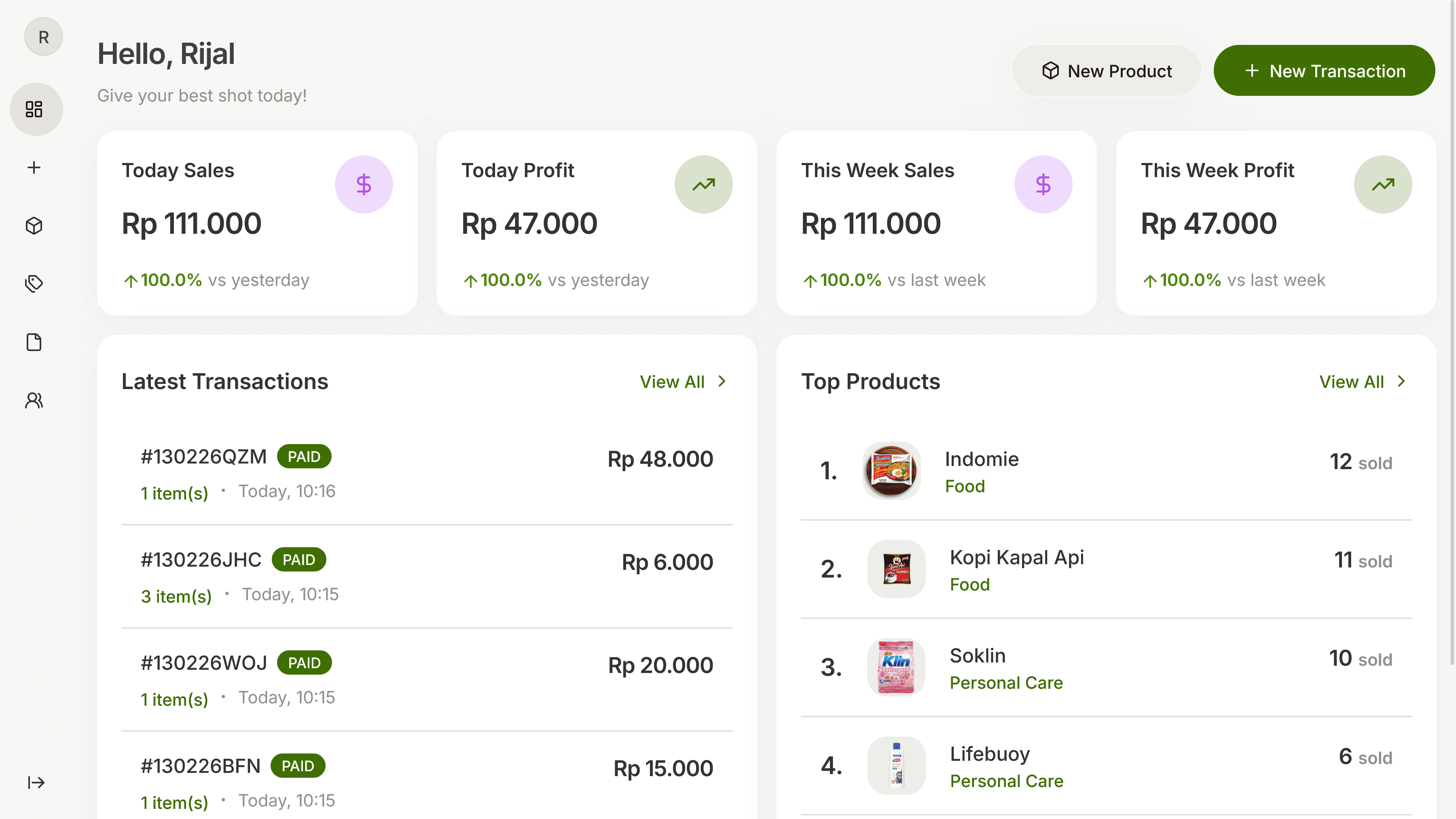
Today’s total sales, transaction count, profit, and recent transactions.
Roles and Access Control
- Owner
- Register / login via email or Google
- Manage employees
- Manage products
- Handle sales and checkout
- View transactions
- Manager
- Login via PIN
- Manage products
- Handle sales and checkout
- View transactions
- Cashier
- Login via PIN
- Handle sales and checkout
The role system is intentionally simple to avoid slowing operations.
Checkout Flow
Checkout, as the core feature of Qlaris, is designed to be simple and fast using this flow:
- Login (Email/Google for Owner, PIN for Manager/Cashier)
- Click “New Transaction”
- Search product (text input, barcode scan, category filter)
- Set quantity
- Click “Continue to Charge”
- Enter received cash and click “Process Payment”
- Invoice appears automatically
Architecture
Qlaris uses a minimal but production-ready data model:
- Business
- User (role + Password/PIN)
- Product (optional barcode & stock)
- Transaction
- Transaction items (snapshot-based)
Design decisions prioritize clarity, speed, and historical accuracy.
Tech Stack
- Next.js — fast, reactive UI optimized for mobile and tablet
- Go (Fiber) — high-performance REST API with low latency
- PostgreSQL — relational data storage
- Google Cloud Run — containerized, scalable deployment
The stack was chosen to balance performance, simplicity, and operational cost for an MVP serving UMKM.
Limitations & Future Direction
Current limitations:
- Cash payments only (no non-cash support)
- No offline mode
- No product variants
- No loyalty program
- No tax, discount, or refund handling
- No cash in / cash out tracking
- No customer database
- No stock movement history
- No multi-outlet support
Reason:
These features are intentionally excluded because they are not essential to completing a sale as quickly as possible.
Next development priorities:
- QRIS payment integration (the most widely used non-cash method in Indonesia)
- Offline mode
These two features are highly demanded by MSMEs and would significantly increase practical adoption.
Why Qlaris Is Not a CRUD App
Qlaris is built around workflow and constraints, not features:
- Designed for phones and tablets, not dashboards
- Barcode scanning as a first-class interaction
- Strict scope control to protect checkout speed
- Product decisions driven by real UMKM behavior
This project demonstrates product thinking, UX trade-offs, and engineering restraint, not just implementation.